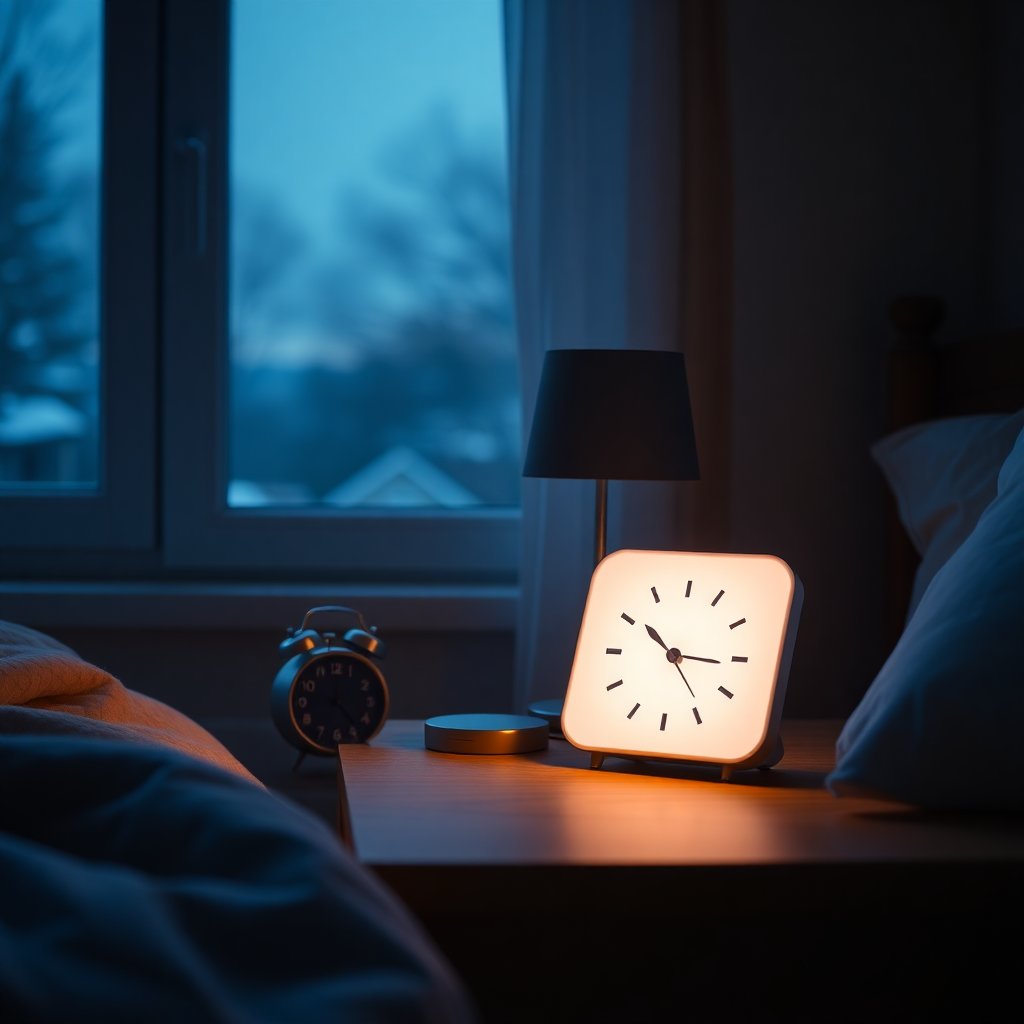
Daylight saving time ended this past Sunday, November 1, and for most of the United States that means the sun now sets before many people leave work. Mornings get a temporary reprieve, but by mid-December the darkest stretch of the year has set in on both ends of the day. If your energy dips every November, you are in good company — and it is exactly the moment when two small, unglamorous gadgets start earning their keep: the light therapy lamp and the sunrise alarm clock.
They solve different problems. A light therapy lamp gives you a concentrated dose of bright, glare-controlled light during the day, usually at breakfast or at your desk. A sunrise alarm clock gradually brightens your bedroom before your alarm goes off, so you wake to something closer to dawn than to a buzzer in a pitch-black room. This guide covers both, explains the specs that actually matter, and flags the marketing claims worth ignoring.
Disclosure: some links below are Amazon affiliate links. If you buy through them, we may earn a small commission at no extra cost to you. Nothing here is medical advice — talk to your doctor before using light therapy for mood, sleep, or any diagnosed condition.
Why the Clock Change Hits So Hard
The switch back to standard time does not change how much daylight there is; it changes when you get it. Commutes, workdays, and school runs stay pinned to the clock, so for a lot of people the usable daylight now falls during hours spent indoors. Indoor lighting is far dimmer than daylight — typical home and office lighting sits in the low hundreds of lux, while an overcast winter day outdoors can be several thousand lux and direct sun far more.
That gap is why bright-light boxes became a standard recommendation for seasonal affective disorder. The Mayo Clinic's overview of light therapy describes the typical approach: a light box of around 10,000 lux, used for a set period shortly after waking, positioned at a specific distance from the face. Research support is strongest for clinical seasonal depression, and evidence for the milder "winter blues" is more mixed. Treat a lamp as one tool alongside getting outside, keeping a regular sleep schedule, and talking to a professional if your mood drops significantly.
Light Therapy Lamps: What to Look For
1. A Real 10,000-Lux Rating — at a Stated Distance
Lux is meaningless without distance. Almost any bright panel can hit 10,000 lux if your nose is touching it. A good manufacturer tells you the distance at which the rated brightness is achieved — commonly somewhere between 6 and 24 inches. Larger panels tend to deliver their rated lux at a more comfortable distance, which means you can actually eat breakfast or type while using one.
If a listing advertises 10,000 lux with no distance given, assume the real working figure is lower.
2. UV-Filtered, Diffused Light
Look for "UV-free" or "UV-filtered" in the specs. Light therapy is about visible brightness, not ultraviolet exposure, and reputable lamps filter it out. A diffused surface (a frosted panel rather than bare LEDs) also cuts glare, which matters when you are sitting near it for 20 to 30 minutes.
3. Size and Placement
There are three broad formats:
- Compact desk panels (roughly tablet-sized): cheapest, easiest to fit on a kitchen counter or desk, but they need to sit closer to you.
- Large upright panels: more expensive and harder to place, but they deliver bright light over a wider area, so you can move a little without leaving the beam.
- Floor or arm-style lamps: double as a regular task light and are the best choice if you want a lamp that looks like furniture rather than a medical device.
If you already have a good task light, our guide to the best desk lamps for eye strain covers the everyday lighting side; a light therapy panel is a supplement to that, not a replacement.
4. Adjustable Brightness and Color Temperature
Multiple brightness levels let you start lower and work up, which many users find more comfortable. Adjustable color temperature is a nice extra — cooler white for the morning session, warmer light if you also use the lamp as a reading light later. A built-in timer is surprisingly useful because it removes the guesswork about session length.
Our Light Therapy Lamp Picks by Use Case
-
Best for most people: a mid-size 10,000-lux panel with a stand. Look for UV filtering, three or more brightness levels, a timer, and a rated distance of at least 12 inches. These usually sit in the $40 to $90 range and fit on a kitchen table or desk without dominating it. → Shop 10,000 lux light therapy lamps on Amazon
-
Best for a home office: a floor or arm lamp with therapy mode. These cost more but blend into a room and can stay on as a regular light after your session. → Shop light therapy floor lamps on Amazon
-
Best budget or travel option: a compact, USB-powered panel. Easy to pack and fine for a desk, but expect to sit close to it to get the full rated brightness. → Shop portable light therapy panels on Amazon
Sunrise Alarm Clocks: What to Look For
A sunrise alarm clock — also called a wake-up light or dawn simulator — starts brightening 10 to 60 minutes before your alarm time, moving from a dim red-orange glow to bright white. The idea is to make the transition out of sleep more gradual, especially on dark winter mornings when it is still night outside at 6:30.
1. Sunrise Duration and Maximum Brightness
Adjustable sunrise length is the first spec to check. Some people like a short 15-minute ramp, others prefer 30 minutes or more. Maximum brightness varies enormously between models: cheaper clocks often top out at a soft bedside-lamp level, while premium models get noticeably brighter. If your bedroom has blackout curtains, a brighter model makes a bigger difference.
2. A Good Dim-Down for Bedtime
Sunset mode — a gradual fade to dark at night — is the underrated feature. It replaces the habit of reading by a bright overhead light and then plunging the room into darkness. If you are working on sleep more broadly, our best sleep products guide covers blackout curtains, white noise, and pillows that pair well with a wake-up light.
3. Sound Options That Are Not Grating
Most sunrise clocks pair the light with a sound — birdsong, waves, chimes, or FM radio. Listen to sample sounds in reviews if you can, because a shrill tone undoes the whole point. A backup sound alarm is essential: if you are a deep sleeper, light alone may not get you up the first few weeks.
4. Controls You Can Use Half-Asleep
Physical buttons and a dimmable display beat a glossy touch panel you have to squint at. App control is convenient for setting schedules but should not be the only way to change the alarm. Check that the clock face itself can dim to near-off — a bright blue display at 2 a.m. defeats the purpose.
Our Sunrise Alarm Clock Picks by Use Case
-
Best for most people: a mid-range wake-up light with adjustable sunrise and sunset. Look for at least 20 brightness levels, a sunrise window of 20 to 40 minutes, several natural sounds, and a dimmable display. Expect roughly $40 to $100. → Shop sunrise alarm clocks on Amazon
-
Best for couples on different schedules: a model with two independent alarms, so one person's 5:30 sunrise does not become the other's. → Shop dual-alarm wake-up lights on Amazon
-
Best for kids and teens: a simple sunrise clock with a "ok to wake" color mode. These double as a nightlight and help younger kids stay in bed until a set time. → Shop kids' sunrise clocks on Amazon
How to Actually Use Them
The gadget is the easy part; consistency is where results come from.
- Use a light therapy lamp in the morning. Most guidance points to a session shortly after waking. Using a bright lamp late in the evening can make it harder to fall asleep.
- Do not stare at it. The light should reach your eyes indirectly while you read, eat, or work. Position it off to the side at the distance the manufacturer specifies.
- Start short. Begin with a shorter session and build up. If you get headaches, eye strain, or feel jittery, cut back.
- Keep the same wake time every day. A sunrise clock works best when it fires at the same time on weekends too. Sleeping in by two hours on Saturday makes Monday's dawn feel like jet lag.
- Still go outside. Even a short walk at midday on a gray day delivers more light than most indoor rooms. A lamp fills the gap; it does not replace daylight.
Who Should Check With a Doctor First
Light therapy is generally considered low risk, but it is not for everyone. People with bipolar disorder, certain eye conditions, or skin sensitivity to light, and anyone taking medications that increase light sensitivity, should talk to a doctor before starting. If your low mood is persistent, affects your daily life, or comes with thoughts of self-harm, a lamp is not the answer — reach out to a healthcare professional. Again: this is general product guidance, not medical advice.
Specs and Claims to Ignore
- "Clinically proven" stamped on a no-name listing. The research is on bright light at specific intensities and distances, not on that particular lamp.
- Blue-only lamps sold as an upgrade. Most widely recommended light boxes use broad-spectrum white light. Blue-heavy lamps are a different product, and some people find them uncomfortable.
- Lux claims with no distance. As above — if the distance is missing, the number is marketing.
- Bundled "aromatherapy" or speaker features. Fine if you want them, but do not pay extra for a lamp because it also plays music.
Do They Make Good Gifts?
Yes, with a little tact. A sunrise alarm clock is an easy, upbeat gift — it reads as "better mornings," not "I think you are struggling." A light therapy lamp is better given to someone who has mentioned wanting one, or framed as a desk light for dark winter afternoons. Either pairs nicely with the cozy picks in our best Christmas gifts for every budget guide, and buying in early November means you get the full range of models before holiday stock thins out.
The Bottom Line
For most people, the best first purchase is a sunrise alarm clock with adjustable sunrise length, a sunset mode, and a dimmable display — it fixes dark-morning wake-ups with zero extra effort. If you notice that your energy and mood dip every winter, add a UV-filtered 10,000-lux light therapy lamp with a clearly stated working distance, and use it consistently in the morning after checking with your doctor. Skip anything that hides its distance rating or leans on vague "clinically proven" badges. The clocks are not changing back until March, so the sooner the light is on your table, the more of the season it covers.
As an Amazon Associate we earn from qualifying purchases. This article contains affiliate links; if you buy through them we may earn a small commission at no additional cost to you.